Cybersecurity Threats and Security Postures in the UAE 2026
Introduction
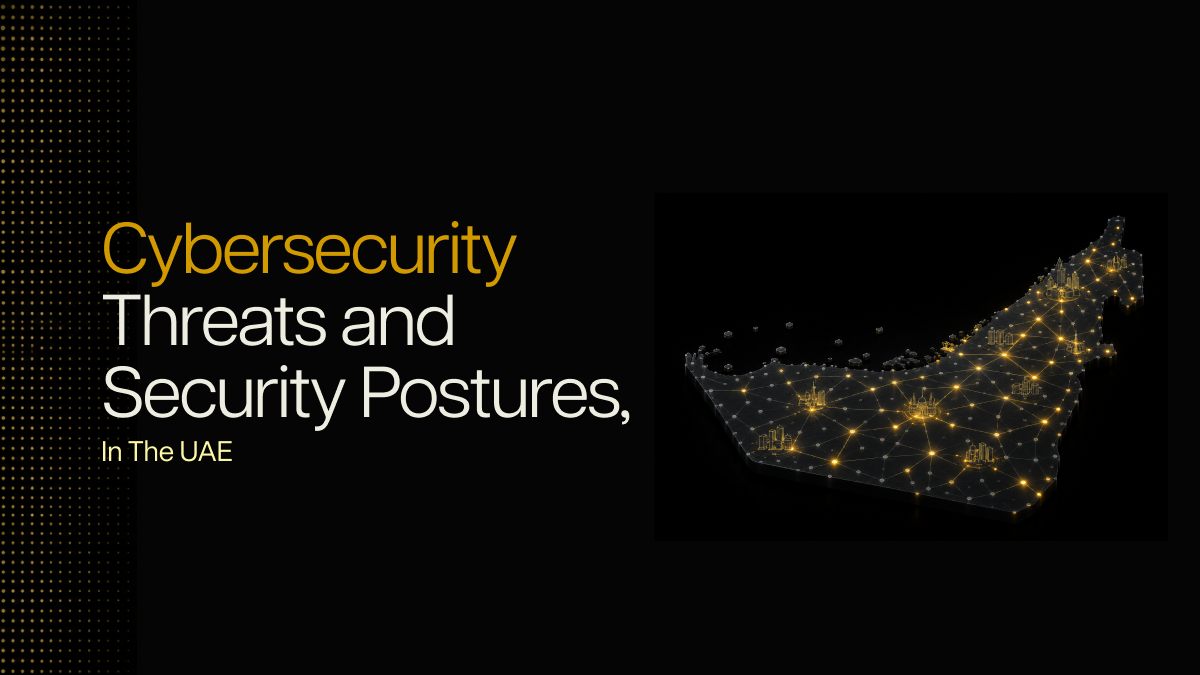
The UAE's digital economy has grown faster than most businesses' ability to secure it. Cloud adoption, remote access, AI tools, and SaaS sprawl have all expanded the attack surface, and the threat picture has shifted to match.
The UAE Cybersecurity Council (CSC) has reported the country faces roughly 800,000 attempted cyber attacks per day. That number covers everything from automated credential-stuffing to targeted ransomware campaigns. Most of it never becomes an incident. Some of it does, and the consequences for a business without a clear security baseline can be severe.
This blog covers the main threats active in the UAE in 2026, what the national response looks like, and what a UAE business with a small IT team should actually be doing about it.
Understanding the Cyber Threat Landscape in the UAE
Cybercriminals are now using AI for varieties of attacks in the region. From standard old attacks like phishing and BEC to new age identity based attacks, everything is becoming a hot topic. Though most of them are being assumed state backed, we at Lumora are seeing multiple attack patterns matching private hacking groups especially in the SMB segment. Here’s what is happening in the UAE:
Phishing remains the primary way in
Phishing is still the leading entry point for breaches in the UAE, and the volume has grown. The Abu Dhabi Emergency, Crisis and Disaster Management Centre recorded a 32% rise in phishing incidents in Q1 2026 alone. What has changed is the quality of the bait(literally): AI tools are now used to draft convincing, context-aware messages that impersonate executives, suppliers, or trusted platforms, which is exactly what makes business email compromise (BEC) harder to catch than it used to be.
Ransomware activity is climbing again
Ransomware has not gone away as deduced previously. Publicly reported incidents reached 707 globally in April 2026, and May recorded the strongest year-on-year growth of the half, up 48% compared with May 2025. The groups behind these attacks also shift quickly: Qilin was the most active group for much of the first half of the year before another group, The Gentlemen, took the lead in June. Organizations often fall into the trap of paying ransom without ever recovering the data. But the best way to secure from these ransomware attacks is keeping ‘essential security’ tight at all times.
AI adoption is creating exposure faster than governance can keep up
Check Point's global data for H1 2026 found that between 1 in 25 and 1 in 31 prompts submitted from enterprise environments carried a high risk of exposing sensitive information, including customer data, financial records, and source code. This does not require an attacker to breach anything. It happens when an employee pastes sensitive content into a tool that was never approved for that purpose, with no visibility into how the input is stored or reused.
Identity is the most under-addressed gap
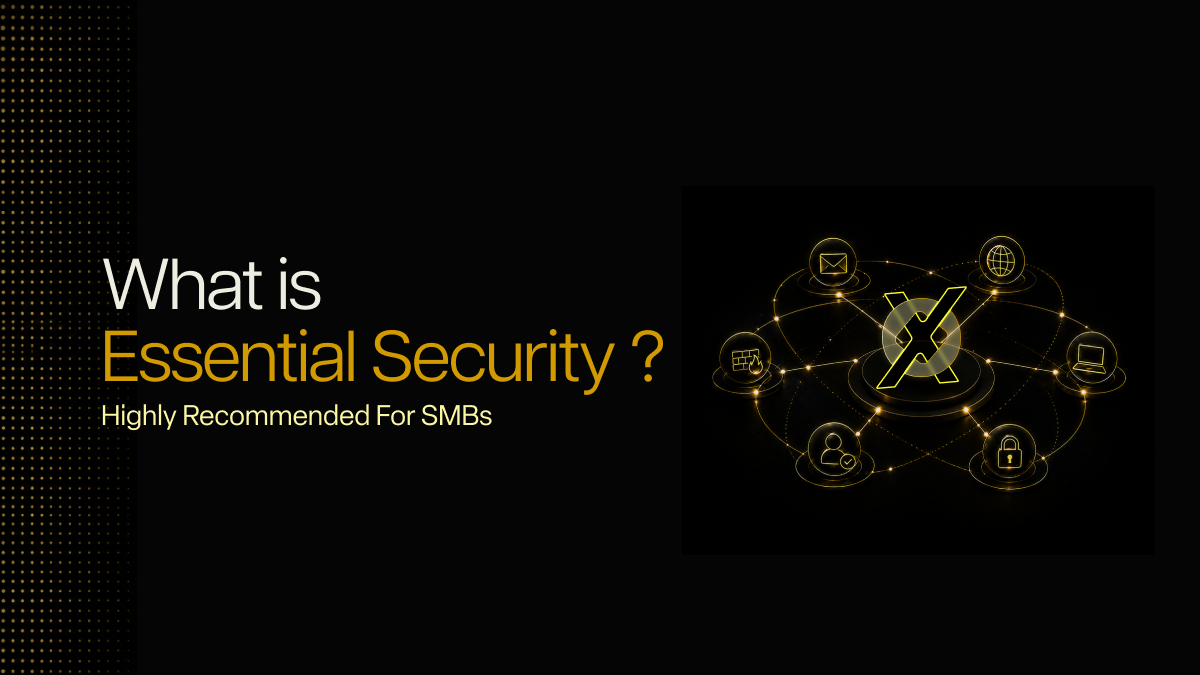
According to Zoho's State of Workforce Password Security 2026 report, more than 45% of UAE organisations have yet to adopt multi-factor authentication or enterprise password management, and over 40% have no identity and access management tooling at all. The same report found that while 80% of UAE enterprises say they have a zero trust strategy in place, only 22% have actually achieved zero standing privileges. Organizations believe they have the tools to detect and respond to attacks, but identity remains the gap attackers exploit most often through compromised credentials and excessive access that goes unnoticed. IAM is one of the essential security pillars that needs to be addressed including MFA, password mgmt., tightened email filters and always active endpoint monitoring. All of which is part of LumoraX – the only security solution you need.
The regional picture adds another layer
Wider regional tensions in 2026 have also shown up in cyber activity, with campaigns targeting exposed internet-connected devices and cloud environments across the region. UAE organisations are no longer only defending against financially motivated cybercrime. Some of the activity now reflects intelligence gathering and disruption tied to broader geopolitical events, which raises the stakes for critical sectors in particular: government, financial services, energy, and healthcare have all remained under consistent pressure through the year.
As the UAE threat picture shifts month to month, businesses can often get a concise picture on what's new and what it means for smaller teams in particular by subscribing to The Lumora Security Brief on LinkedIn or Substack.
The UAE’s National Cybersecurity Posture
To combat growing threats, the UAE has built a multi-layered national defense Security Posture under the guidance of the Cybersecurity Council (CSC).
Key Pillars of the UAE’s Security Posture
- Governance and Standards - The CSC governs cybersecurity strategy that aligns organizations with ISO 27001, NIST, and CIS frameworks.
- Threat Intelligence and Collaboration - Promotes the sharing of real-time attack data between the government and the private sector.
- Incident Response Coordination (aeCERT) - Centralized reporting and recovery support for cyber incidents.
- Awareness and Capacity Building - National awareness campaigns and cyber drills strengthen digital literacy.
- Public–Private Partnerships - Treats cybersecurity as a shared mission connecting regulators, enterprises, and academia.
Under the National Cybersecurity Strategy 2025-2031, the direction has moved from voluntary compliance toward mandatory resilience. Organisations that treated security frameworks as optional are finding that expectation has shifted, particularly for those in regulated sectors such as financial services, energy, and healthcare.
Adapting to Emerging Threats: UAE’s 2026 Cyber Priorities
In 2026, the UAE's national defense has leaned further into AI. Under the National Cybersecurity Strategy (2025-2031), the emphasis has moved from voluntary compliance toward mandatory resilience, with the Cybersecurity Council (CSC) coordinating faster, AI-assisted detection across national networks.
Most of the practical steps below require no specialised team to begin. What they require is clarity about the current state of your essential security setup before committing budget or time.
1. Enforce MFA across all accounts
Multi-factor authentication is the single highest-return control available for most SMBs. It stops credential theft from becoming a full account compromise. If MFA is not enforced for Microsoft 365, Google Workspace, and any other critical application, this is the first thing to address.
2. Protect your email domain
Most BEC attacks rely on domain spoofing. A DMARC record, properly configured and enforced, prevents attackers from sending email that appears to come from your domain. SPF and DKIM should also be in place.
3. Maintain endpoint visibility
Endpoint detection and response (EDR) tools give you visibility into what is happening on employee devices and the ability to contain a threat before it spreads. Antivirus alone is not sufficient.
4. Test your backup and recovery
A backup that has never been tested is a backup of unknown reliability. Monthly recovery tests for critical data, with defined recovery time targets, are a basic requirement for any business with data exposure.
5. Run a security assessment before buying more tools
Many UAE SMBs already have Microsoft 365, some form of endpoint protection, and a firewall. The problem is usually configuration and coverage gaps, not missing products. Understanding what you have, and where the gaps are, is more valuable than adding another licence.
If you want a clear picture of where your business stands, Lumora's Essential Security Review gives you a structured assessment mapped to NIST CSF 2.0, with a written report and recommendations, in around 72 hours. You can see a sample report before committing.
6. Establish an AI use policy
With AI tools now used across almost every business function, most UAE SMBs have no policy governing what data employees can enter into them. Sensitive client data, financial records, or internal communications entered into public AI tools create a data exposure risk that is simple to address with a basic internal policy.
Where to go from here
The UAE's threat environment in 2026 is not dramatically different from previous years in type, but it is considerably more automated and harder to spot at the human level. The national frameworks are solid. The more common gap is at the business level, where security controls have not kept pace with how the business actually operates.
For growing businesses that do not have a dedicated security team, the most practical path is a all in one essential security solution that offers managed security support and handles ongoing monitoring, response, and configuration, so the business does not have to. If you want to understand what that looks like for a UAE SMB, explore LumoraX today. It definitely is the only essential security solution you need.


.avif)